








Portable pool regulations in Spain: do you need a permit?
The short answer is: it depends on whether there's excavation, not on whether the pool is 'portable'. A portable pool installed on the ground, with no construction work, usually doesn't need a building permit — but as soon as you start digging to bury or partially bury it, it starts counting as a building act in most town councils, and that changes everything. Here's the real regulation, without assuming anything.
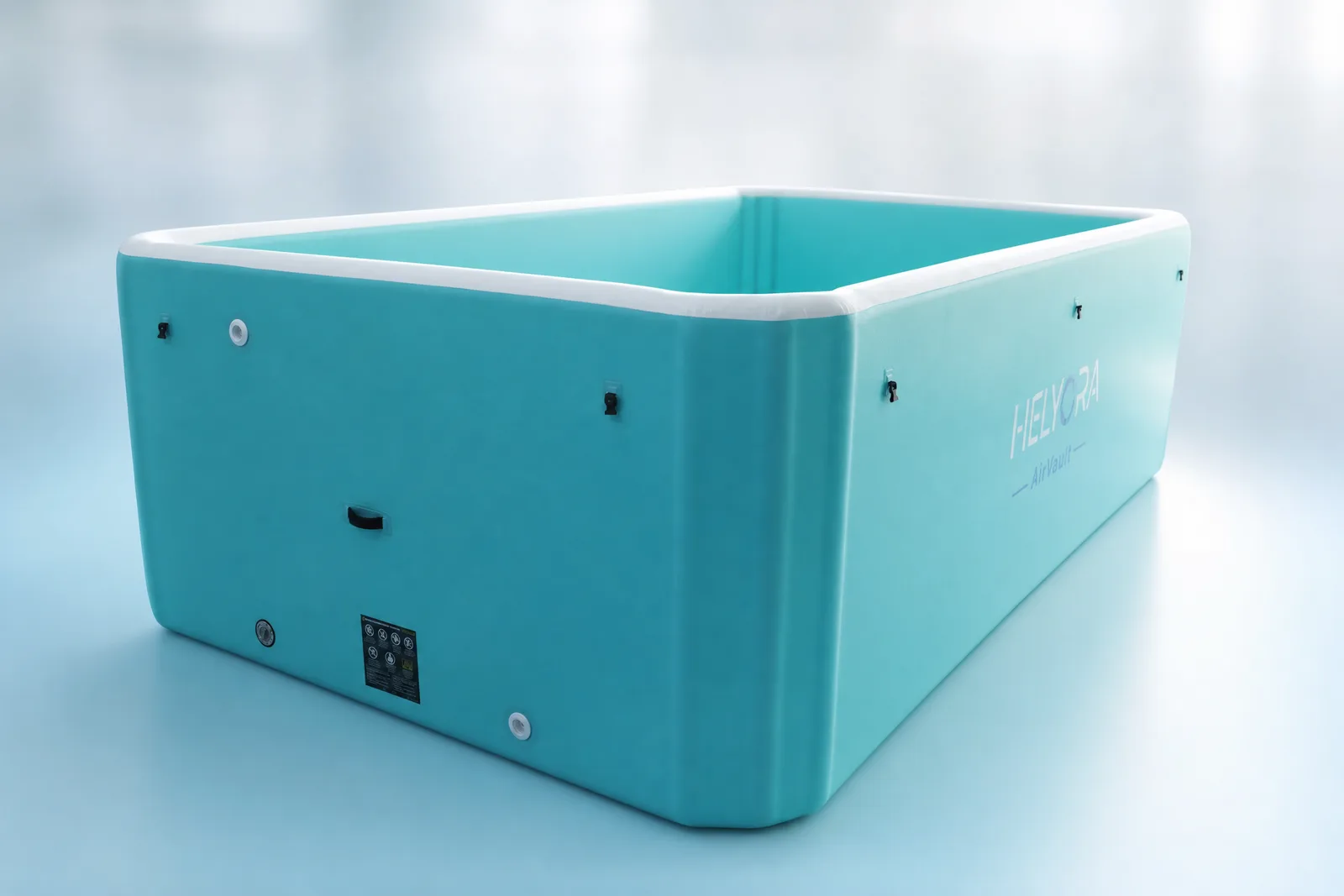
Does a portable pool installed on the ground need a permit?
In the vast majority of municipalities, no. A raised portable pool, with no foundation or excavation, isn't considered construction work for planning purposes: there's no earthmoving, no fixed anchoring to the ground, and, if you decide to, you can take it apart in an afternoon. That keeps it outside the building-permit regime in most local ordinances.
That said, 'no permit needed' doesn't always mean 'no paperwork at all'. Quite a few town councils require a responsible declaration — an administrative notice, not a prior authorization — especially if the pool stays installed for more than one season or exceeds a certain volume. There's no single threshold valid for all of Spain: each municipality sets its own.
What if I bury or partially bury it? This is where the answer changes
This is the question we left open in our article on burying a portable pool: technically, yes, it can be done with geotextile and no retaining wall, as we explained there. But when it comes to permits, things change as soon as there's excavation, and that's where the pool's material stops being what matters.
For the town council, it doesn't matter that the shell is a factory-made Drop Stitch portable structure: what counts is that you've moved earth, created a permanent pit on the plot, and, in practice, made a fixed installation. Partially burying it is usually processed as minor building work; burying it fully, with complete excavation, connections, and sometimes a support base, is treated as a fixed installation and usually requires a building permit — typically minor, though depending on volume or local ordinance it may require a technical project. The key isn't 'portable or not', it's the real impact on the land.
What exactly is a responsible declaration?
It's a document you submit yourself, under your own responsibility, declaring that your installation complies with applicable regulations — without waiting for a prior decision from the town council before starting. It's the usual procedure for portable pools of a certain size on the ground. A building permit, on the other hand, does require an express decision before you act: for a semi-buried pool it's usually processed as minor building work (2 to 4 weeks), and for a fully buried one it can reach major-building-work timelines if the volume or local regulation requires it.
Setback distances and plot coverage: what applies in both cases
With or without excavation, almost every local urban plan and municipal ordinance sets a minimum distance to the plot boundaries — usually between 2 and 3 meters, though it varies by municipality — and many count the pool's surface as plot coverage, with its own limit. On rural or protected land, the installation may not even be allowed at all, regardless of whether it's portable or built. This applies just as much to an installation on a terrace as to one on ground-level garden.

Do you have to declare it to the Land Registry (Catastro)? Does it raise your property tax?
Here, the difference between 'on the ground' and 'buried' is decisive again. A raised portable pool that you can pack up and store away usually isn't considered a fixed installation for land-registry purposes. A buried or semi-buried pool, on the other hand, is considered fixed — and as such, it should in principle be declared to the Land Registry, which can raise the property's assessed value and, with it, the property tax bill. Not declaring it doesn't make the risk disappear: it can lead to a later regularization with surcharges, typically when there's an inspection, a home sale, or an application for another building permit.
What happens if I install it without checking local regulations?
Penalties for planning violations vary a lot by municipality and region, but as a rough guide they tend to fall into three brackets: minor infractions (missing paperwork, small irregularities) between a few hundred euros and €3,000; serious infractions (building without a permit, significant planning violation) between €3,000 and €15,000; and very serious infractions (non-developable land, repeat offenses) that can exceed €15,000. Beyond the fine, the town council can require you to legalize the installation within a given period or, in the worst cases, take it down. No figure replaces the real answer, which only your own town council can give: before you dig, a five-minute call to the planning department avoids most of these problems.
In short: the right question isn't 'portable or built'
It's 'is there excavation or a fixed installation, yes or no?'. If the answer is no — a portable pool set up in 20 minutes on the ground, without touching the terrain — you usually won't need a building permit, though it's worth confirming whether your town council requires a responsible declaration. If the answer is yes — you bury or partially bury it — you move into a different regime, with a permit, setback distances, plot coverage, and, likely, the Land Registry and property tax in the mix. Either way, the step that saves you headaches is the same: ask your town council before you pick up the shovel. If what you're after is the right pool for your space, whether ground-level or meant for burying, you'll find the whole range in our pool collection.