








Can you bury or partially bury a portable pool?
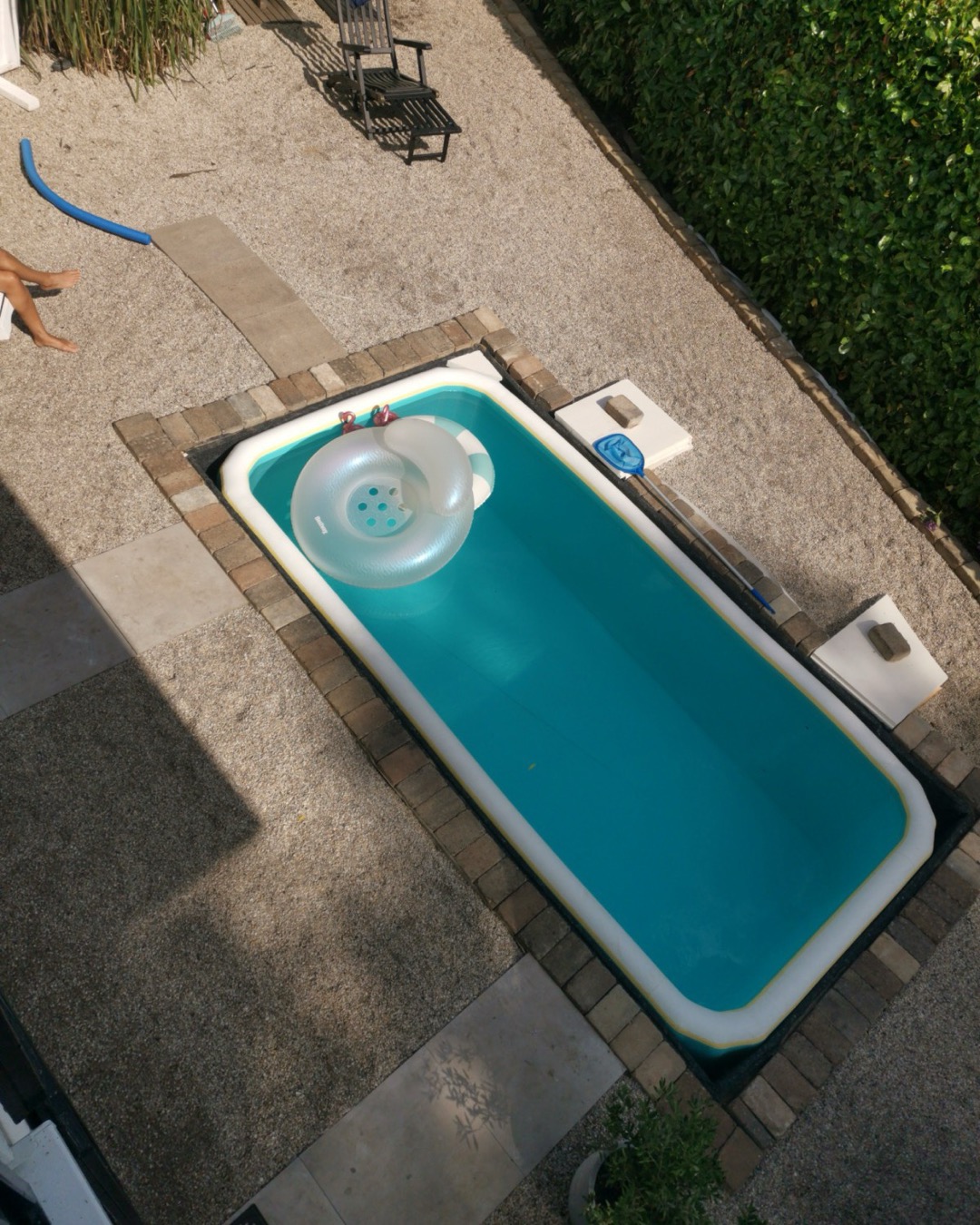
Yes, you can fully bury a portable pool — flush with the ground, with an invisible wall from the outside, so it doesn't look any different from an in-ground pool. You don't need to build a retaining wall or excavate the way you would for a concrete pool. What you do need is two specific precautions, and here's a real case (not a render) to see it with your own eyes.
What actually needs protecting when you bury the pool?
The PVC liner. Not the structure itself, but the material: soil can contain stones, roots, or pebbles that, in prolonged direct contact with the PVC, end up rubbing or puncturing the liner. That's the real risk of burying a portable pool without taking precautions — it's not that the structure will give way under soil pressure, it's that the surface can be damaged by friction if you don't physically separate it from the ground.
The solution is simple: a layer of geotextile fabric around the entire buried area, between the soil and the liner. The geotextile acts as a physical barrier — it lets water through but not stones or roots — and that's enough to protect the liner without needing any wall, box, or retaining structure.
Doesn't the soil pressure damage the wall?
Not while the pool is full. The water inside pushes outward with a force similar to or greater than the compacted soil pushing in from outside, so the wall stays balanced on both sides — it's the same principle that keeps a portable pool rigid when standing on the ground, only here the push also comes from the buried sides.
The one rule with no exceptions is this: if the pool is buried, it has to stay full while it's in that position. Emptying it at the end of the season means taking it apart completely — removing it from the pit, not leaving it empty and buried over winter. With no water inside, there's nothing to counter the soil's push, and that's when it can deform.
Do you need to think about drainage for the dug-out pit?
It depends on the terrain. In well-draining soil (sandy, with natural gravel) you usually don't need anything special: rainwater filters through just like in the rest of the garden. In very clayey or poorly permeable soil, water can pool for several days around the buried area after heavy rain — that's not a structural risk if the pool is full, but to keep the geotextile and the pit from staying waterlogged permanently, adding a few centimeters of gravel before laying the geotextile helps the water circulate instead of stagnating.
Real case: a Marea buried flush with the ground
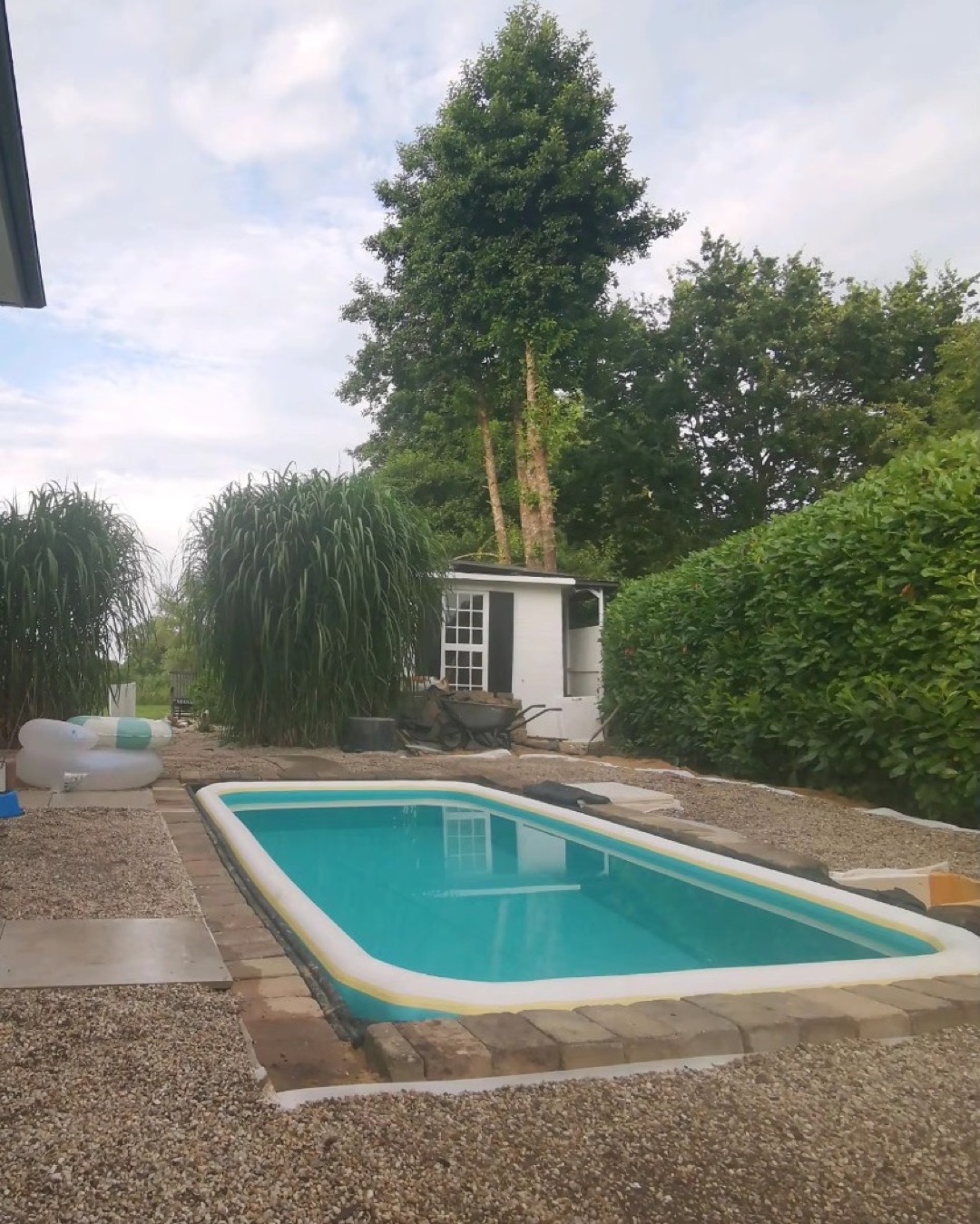
This is a real installation from a customer with the Marea 4×2: excavation to the depth of the pool, geotextile around the entire buried area, and a paver border finish — that brick edge is decorative, to visually finish the transition between the garden gravel and the pool, and it serves no structural function. The result is a pool flush with the ground, integrated into the garden, with the same maintenance and the same AerVault™ technology as any Marea installed above ground.
Which models work best with a buried installation?
Rectangular models tend to give better results than round ones, because they blend in more naturally with a dug-out pit and the garden's finish — the right angles make it easier to meet the geotextile and whatever perimeter finish you choose (grass, gravel, pavers). If you're already set on this look, it's worth checking first how the Drop Stitch structure works on the inside to understand the technology you're burying.
Do you lose the warranty if you bury it without geotextile or leave it empty?
The 3-year EU legal warranty and the estimated 7-10 year service life are two different things, and it's worth not mixing them up here. What is clear is that damage caused by burying the pool without geotextile — a puncture from a stone, for example — or by leaving it empty and buried out of season, is not the same as a manufacturing defect. Those are damages caused by an installation or use outside the recommended conditions, so prevention (geotextile + never emptying it while buried) is worth getting right before you dig, not after.
Alternative if you'd rather not dig at all
If you don't want to deal with excavation, there's a shortcut that gives a similar visual result: building a deck around the pool installed at ground level, letting the wood rise to cover most of the height of the outer wall. Integrated edges, less visible wall, without touching the structure or digging anything — and with setup in the same usual 20-30 minutes.
If your terrace or patio isn't at ground level but raised above a lower floor, weight is the variable that matters most, even before the aesthetic finish — you can see the full calculation in this guide on portable pools on a terrace. And if what you're looking for is simply the right rectangular pool for your space, whether at ground level or buried, you'll find the whole range available in our pool collection.
One Response