








How to winterize an above ground pool: leave it up or store it
Once the water drops below 15 °C hardly anyone swims, and the question of every autumn arrives: do I leave it up or put it away? With a rigid Drop Stitch above ground pool both options work. It depends on where you live, whether it freezes, and whether you want to swim again in spring without starting from scratch.
Leave it up or store it? How to decide
The short rule: if it only freezes a few nights a year where you live, you can leave it up; if it freezes often or you won’t check on it for months, it’s better to drain it and store it. The 0.7 mm PVC withstands sun, rain and chlorine, so the winter risk isn’t the pool itself: it’s ice, wind and untreated standing water.
| Leave it up | Drain and store it | |
|---|---|---|
| Ideal for | Mediterranean coast, Canary Islands, southern Portugal and Italy | Inland, mountain areas and places with frequent frost |
| Work in autumn | Cleaning, winter treatment and cover | Draining, drying and folding (one afternoon) |
| Work in spring | Check the water and the pressure | Set it up and fill it again |
| Water | Kept | Fully replaced |
| Main risk | Hard frost and dirt | Storing it damp (mould) |
If I leave it up, what do I need to do?
Five steps, once the water drops below about 12–15 °C:
- Clean thoroughly: remove leaves, run the pool vacuum and brush the walls. Anything left inside decomposes for months.
- Balance the water: pH between 7.2 and 7.6, plus a shock chlorination a few days before closing.
- Add a winterizing product following the manufacturer’s dosage: it slows algae and limescale while the filter pump is off.
- Lower the water level slightly, a few centimetres below the rim, so rain doesn’t make it overflow.
- Cover it with an opaque cover secured tightly: no light means no algae, and no leaves means no dirt.
Once a month, lift a corner of the cover, check the colour of the water and remove any rainwater sitting on top. If you are putting the filter pump away, drain it and store it indoors: ice inside the filter or pump can break them.
What if it freezes? Can ice damage it?
A light overnight frost forms at most a thin layer on the surface and isn’t a problem. What you want to avoid is weeks on end below zero, because water expands as it freezes and pushes against the walls. If that happens where you live, you have two options: drain it, or spread winter floats (or plastic jugs half filled with sand and water) across the surface, so they absorb the pressure of the ice instead of the walls.
A detail that surprises many people: in the cold, air pressure drops on its own, without any leak. It’s physics: a wall inflated to 10 PSI on a 25 °C day reads about 8 PSI at 0 °C. If it feels softer when you come back in spring, top it up to 10 PSI first and check the next day before suspecting a puncture.
Can I leave it up but empty?
We don’t recommend it. Without water, a rigid above ground pool weighs very little, and the wind can move or flip it. The floor is also left exposed to frost and sun without the protection of the water. If you are going to drain it, finish the job: dry it, deflate it and store it.
How do I drain it without damaging the garden?
Stop adding chlorine about 5–7 days beforehand and test with a strip: once free chlorine is practically zero, the water can be used to water the garden in small batches, without flooding it. Avoid pouring it onto the pavement or into a stream, and check your local council’s rules, as some municipalities regulate where pool water can be discharged. To remove the last few centimetres, a submersible pump or a wet vacuum saves a lot of time.
How do I fold and store it without damaging it?
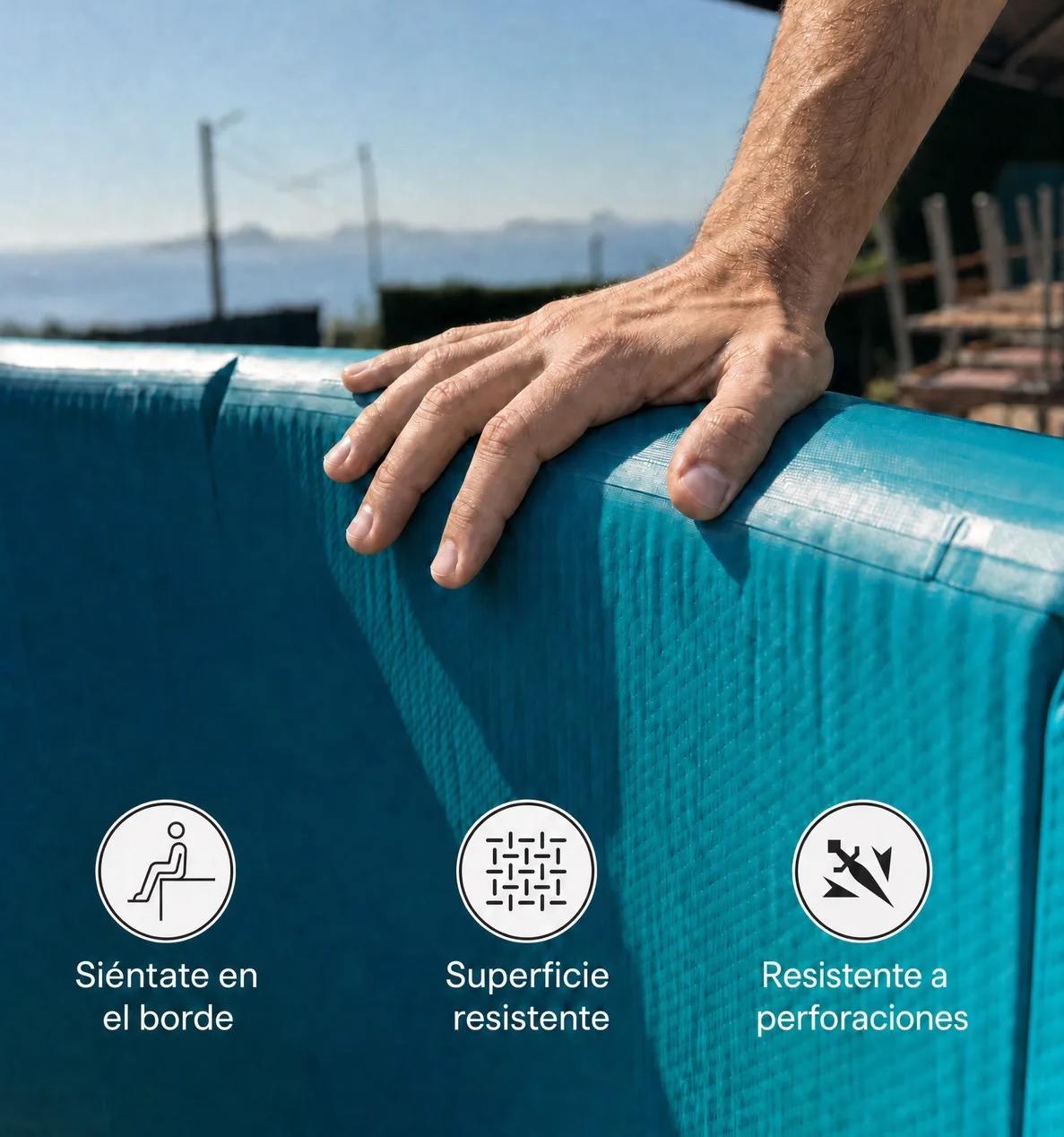
The order matters more than the technique:
- Clean the walls and floor with water and mild soap, without scourers or solvents.
- Dry it completely in the sun, inside and out, including seams and folds. Storing it damp is the number one cause of mould and bad smells in spring.
- Inspect it: if you see a deep scratch or a pinhole, repair it now with the included PVC kit, not in June.
- Deflate it completely by opening the valve, and fold it on a mild day. PVC becomes stiffer in the cold, so folding it at low temperatures puts more strain on it.
- Vary the folds slightly from one year to the next, so the same line doesn’t always get creased.
Store it in its bag, inside a closed plastic box if there are rodents around, in a dry place, free of damp, away from direct sunlight and with nothing heavy on top. A storeroom or garage works; an attic that reaches 50 °C in summer, not so much.
What do I do in spring to use it again?
If you stored it, setting it up is the same as on day one: spread it out, inflate it to 10 PSI and fill it. You’ll find the steps in the guide How to Set Up a Portable Pool in 20 Minutes. If you left it up, remove the cover, clean it, adjust the pH, do a shock chlorination and run the filter pump for a few days before the first swim.
Either way, check the pressure after 24 hours: with spring temperature swings it’s normal to need a few pump strokes.
In summary
Mild climate: leave it up, with winter treatment and a cover. Frequent frost or months without checking on it: drain it, dry it well and store it folded on a mild day. For the rest of the year, see our guide to maintaining a portable pool, and if you’re thinking of buying for next summer, the answers to the most common questions are in rigid inflatable pool: 11 questions answered.