


Concrete, Prefab or Portable Pool: Which Is Cheaper?
The cheapest is the portable pool, by a long way. Between concrete and prefab, prefab is usually somewhat cheaper and goes in much sooner, but not by as much as people think: both are in-ground, both need excavation and both need a permit. Here are the 2026 figures for an 8×4 metre family pool and what each price really includes. If you are looking for a specific size, you'll find the details on how much a 6×3 pool costs.

Which is cheaper, a concrete or a prefab pool?
Usually, the prefab. For an 8×4 metre pool, a sprayed-concrete (gunite) pool costs between €18,000 and €28,000, and a polyester or fibreglass prefab between €13,000 and €20,000 installed, according to the ranges Cronoshare publishes for 2026. The difference is in the shell: a concrete one is built on site, with formwork, concrete and lining, while a prefab shell arrives factory-made and goes in within a few days.
But the savings come with small print. The price of a prefab shell in a catalogue almost never includes transport, the crane, excavation, the slab or the backfill. And the shape and size are fixed: if you want something custom, only concrete gives you that.
Does a prefab pool need building work and a permit?
Yes. It is the most common misunderstanding: “prefab” does not mean “no building work”. The shell comes ready-made, but you have to dig the hole, pour a concrete base, set the pool, backfill around it and connect the filtration. For a 6×3 pool 1.5 m deep, the excavation alone costs around €1,000. And because there is earthmoving and a fixed installation, the council treats it just like a concrete pool: it requires a permit, which usually costs 4 to 6% of the budget. We explain it in our regulations guide.
Are all portable pools cheap?
No. “Portable” covers very different products:
- Seasonal inflatable and frame pools: from under €100 up to a few hundred. They are the cheapest, but the walls give way with use and they are made to last only a few seasons. We compare them in Inflatable Pool vs. Rigid, Dismantlable Pool.
- Steel-panel pools designed to be buried: they are sold as portable, but they are installed almost like a prefab. A 7×3.5 m one costs between €10,000 and €16,000 installed.
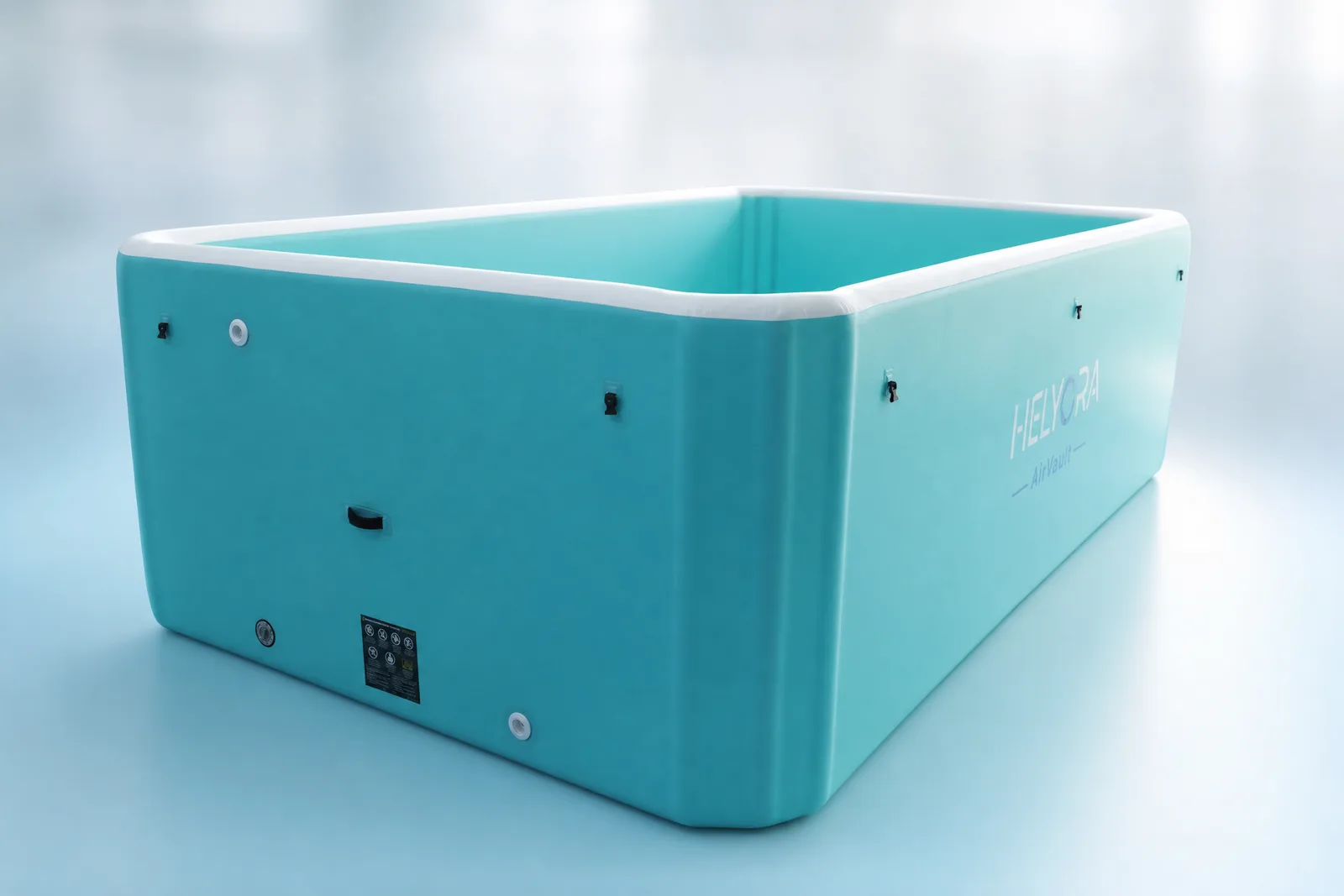
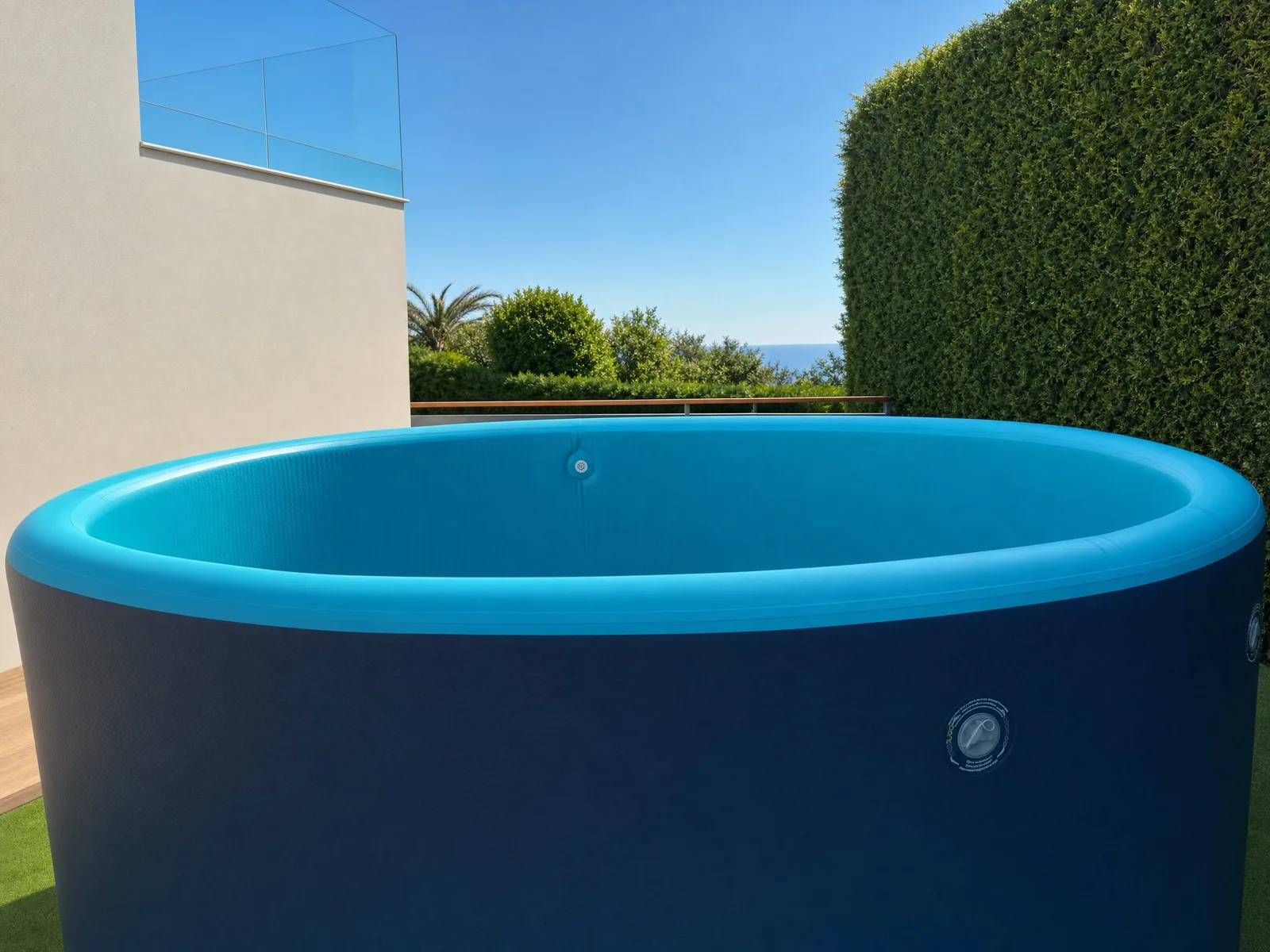
- Rigid Drop Stitch portable pools, like Helyora: from €799 to €2,999 depending on size, with rigid walls up to 150 cm deep, tool-free setup in 10–35 minutes and free shipping within the EU.
2026 price comparison
| Type | Approximate price | Excavation | Permit | Timeline |
|---|---|---|---|---|
| Concrete (8×4 m) | €18,000–28,000 | Yes | Yes | Weeks or months |
| Polyester prefab (8×4 m) | €13,000–20,000 | Yes | Yes | A few days of work + permit |
| In-ground steel panels (7×3.5 m) | €10,000–16,000 | Yes | Usually yes | Days + permit |
| Helyora rigid portable (up to 6×3 m) | €799–2,999 | No | Usually not, above ground | Under 35 minutes |
These are market ranges, not quotes: the ground, the region and the finishes change the final figure a lot. What does not change is the order: a rigid portable pool costs a fraction of any in-ground pool.
And in the long run, which is cheaper?
An in-ground pool, whether concrete or prefab, adds costs every year: filtration and electricity, chemicals, water renewal and a possible rise in property tax as the cadastral value of the home goes up. According to Cronoshare, annual maintenance ranges from 200 to over 1,500 €. An above ground pool has the same water and treatment costs only in the months you use it, and out of season you can drain it and store it, as we explain in how to winterize an above ground pool.
The advantage of an in-ground pool is different: it is permanent, can add value to the house and allows any shape. If you are going to live in the same home for many years and want a pool built into the garden, it makes sense. If you rent, might move or don't want building work, it doesn't.
How long until each one is ready to swim in?
A concrete pool, counting design, permit, construction and curing, realistically takes 2 to 4 months from signing the quote to the first swim. A prefab pool cuts the building work to a few days, but the permit and the excavation still set the timeline, so allow several weeks. A rigid portable pool sets up in 10–35 minutes without tools, and all that is left is to fill it. If you decide in spring that you want a pool for the summer, an in-ground one is cutting it fine; a portable one is not.
What happens if you move or something breaks?
An in-ground pool stays with the house: you cannot take it with you if you sell or move, and removing it means demolition. If a crack or a leak appears in the shell, the repair is building work again. A portable pool is drained, folded and taken to your next home, or stored in a year you won’t use it; a scratch or a puncture is fixed with the included PVC repair kit. It is the difference between a fixed investment in the property and equipment that adapts to how your life changes.
Which one suits me?
- Concrete: if you want a custom shape or size and the house is yours for many years.
- Prefab: if you want a permanent in-ground pool, but with fewer weeks of work than a concrete one.
- Rigid portable: if you want a large, deep pool without digging, without a permit in most municipalities and without being tied to the property.
What should you ask when getting a quote for an in-ground pool?
If you go for concrete or prefab, ask for the quote to itemise these costs, because they are the ones usually left out of the advertised price:
- Permit and, if the council requires it, a technical project.
- Excavation, soil removal and machinery access to the garden.
- Transport and crane for the shell, in the case of a prefab.
- Filter system, a room or shed for the equipment, and the electrical installation.
- Surrounding paving, ladder and finishes.
- Delivery date in writing and what happens if it is delayed.
With those items on the table, comparing quotes is meaningful and you won't get surprises halfway through the work.
In summary
A prefab pool is usually somewhat cheaper than a concrete one and goes in sooner, but both are in-ground pools, with excavation, a permit and year-round maintenance. A rigid portable pool plays in a different price league: for under €3,000 you get a pool up to 6×3 metres and 150 cm deep, ready the same day. You can see every size in the Marea range and the Azora range.
Price sources: Cronoshare and Habitissimo, accessed in September 2026.