








No-Construction Portable Pools for the Garden: A Complete Guide
Want a pool in your backyard this summer but don't want to deal with excavators, concrete, or paperwork? You're not the only one. The search for Portable pools for the garden that require no construction is skyrocketing every year because more and more families are discovering that you no longer need a concrete pool to have real water at home. In this guide, we provide straightforward answers to the five most common questions: which one to choose, what size, whether you need a permit, how to prepare the site, and which materials are truly durable.
What are the best above-ground pools for a backyard without any construction work?
The best above-ground pools for a garden that don't require construction are those from Rigid Drop Stitch Wall: They can be set up directly on the ground in about 20 minutes, without tools, without a metal frame that rusts, and without disturbing a single tile in the garden. When the season is over, they are emptied, folded up, and stored in a closet.
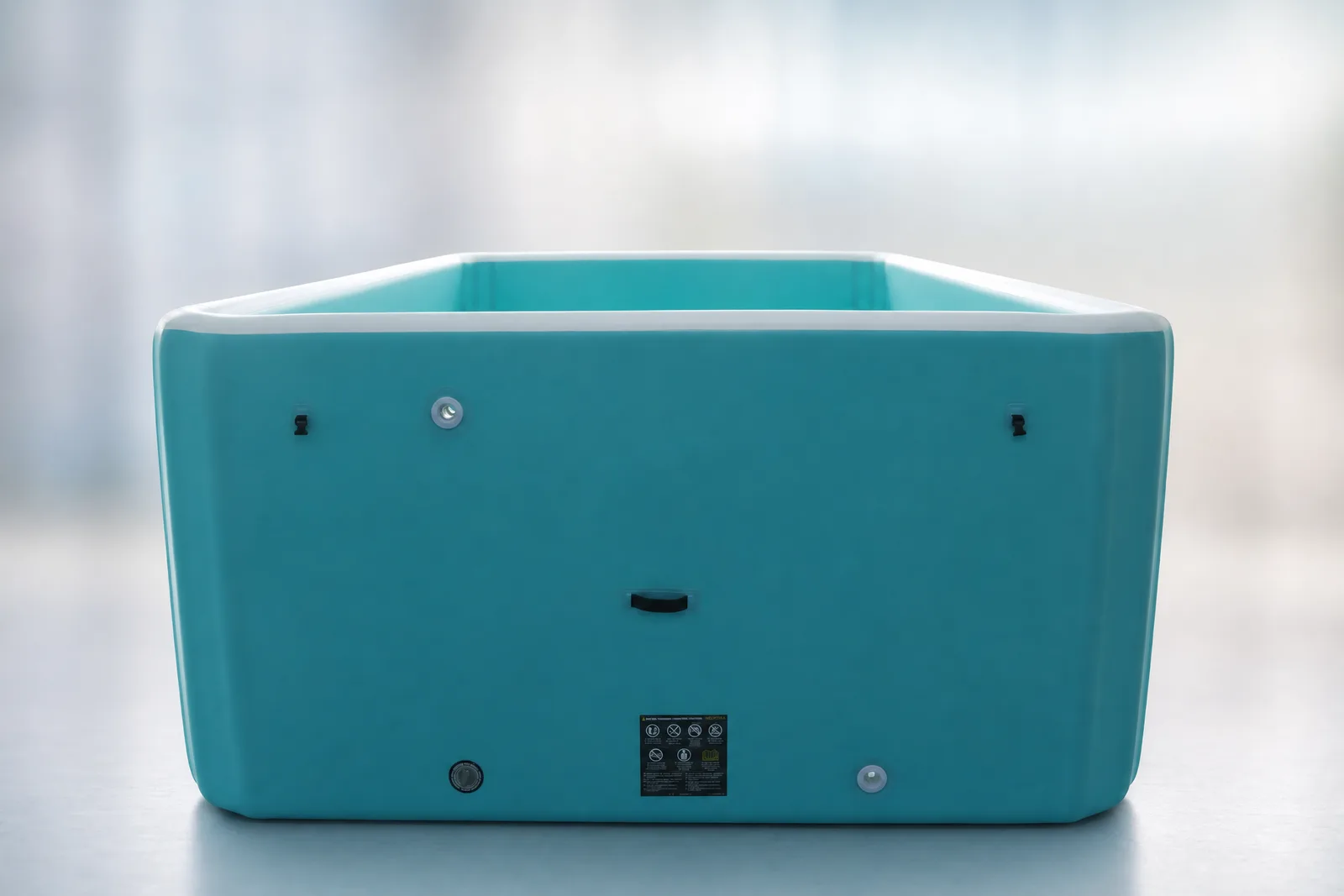
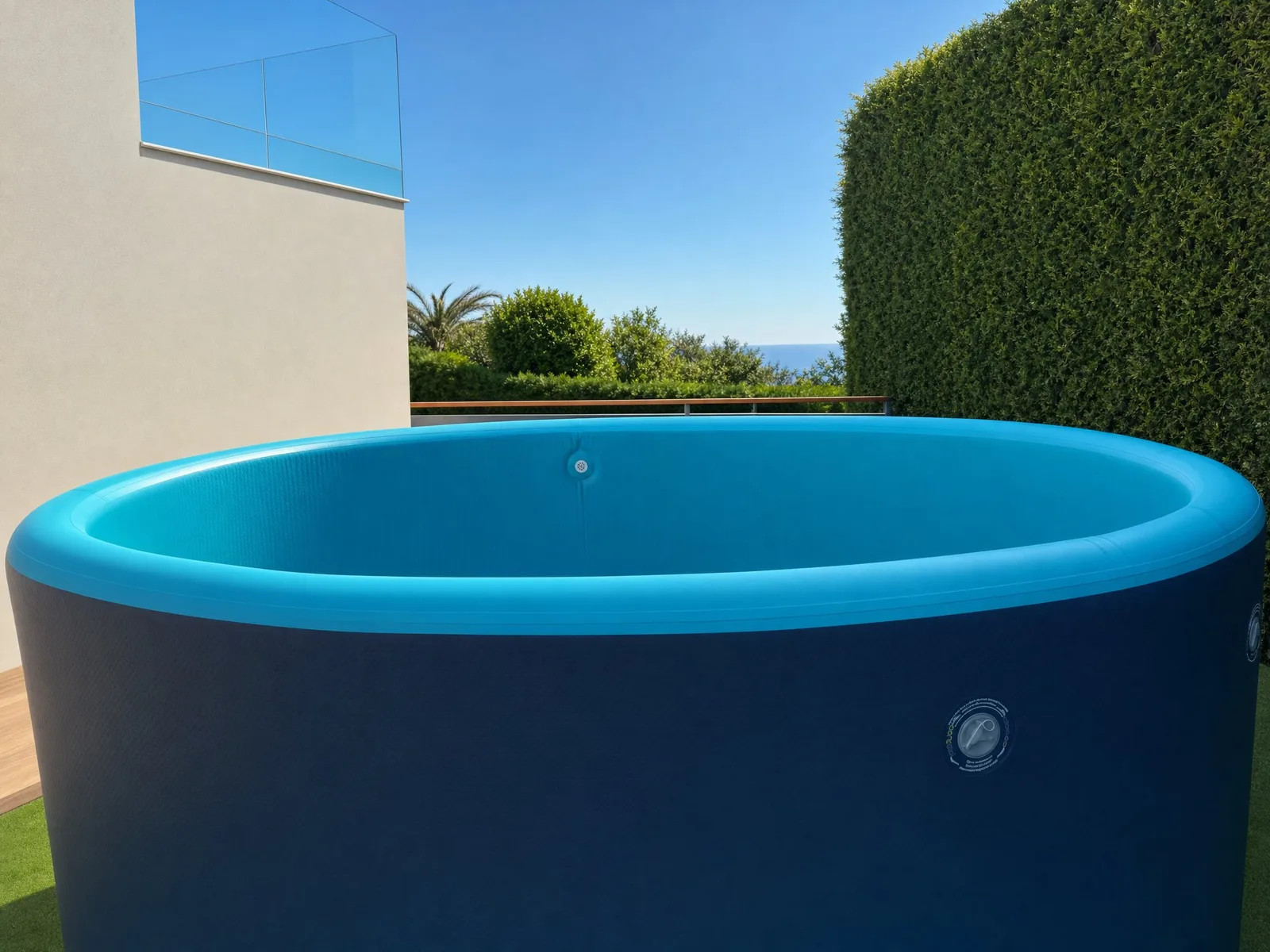
Within that category, you have three classic options: conventional inflatables (inexpensive, but with soft walls that lose their shape and last only one or two summers), steel-tubular models (more stable, but with metal frames that eventually rust and are tedious to set up), and the collapsible rigid Drop Stitch pools, which combine the portability of the former with wall rigidity comparable to that of an in-ground pool. At Helyora, we manufacture only this last category: the ranges Azora (round), Marea (rectangular) and Solara (with a spa area) that you can see on our swimming pool store. If you're unsure which technology to choose, check out our comparison of Inflatable Pool vs. Rigid, Dismantlable Pool We'll explain it step by step.
What size above-ground pool should I choose for a medium-sized yard without having to do any construction work?
For a medium-sized garden (between 50 and 150 m²), the sweet spot is at a a round one 3 to 4 meters in diameter or a rectangular one up to 4–5 meters long. They take up between 7 and 15 m² of floor space, leave room to enjoy the garden, and provide ample space for 4–6 people to bathe at the same time.
The rule of thumb we use with our clients is simple: measure the flattest area of your yard and subtract one meter of perimeter clearance on each side to allow for movement, cleaning, and easy access. What remains is your maximum pool area. Also keep in mind:
- Small garden (less than 50 m²): 2.5–3 m in diameter. The whole family can swim in it, and there's still room for a garden.
- Medium-sized garden (50–150 m²): 3–4 m round or 4 m rectangular. The perfect balance between water surface and open space.
- Large garden (more than 150 m²): rectangular pool that's 5 m or longer, ideal for swimming. Check out our rectangular pools.
One detail that almost no one takes into account: water. A 3.5-meter round pool holds about 8,000–10,000 liters. The more you tailor the size to your actual usage, the less water, chemicals, and maintenance costs you’ll incur each season.
Do I need a municipal permit to set up a portable pool in Spain?
As a general rule, no: An above-ground, portable pool that rests on the ground—requiring no excavation, no construction work, and no permanent installation—is not considered a construction project and generally does not require a building permit. This is its major advantage over an in-ground pool, which does require a design plan, a building permit, and weeks of paperwork.
That said, be sure to do your research before buying, because the regulations are set by the municipality and there are some nuances:
- Each city council has its own ordinances. Some municipalities require prior notification or a sworn statement even for large portable pools. A quick call to city hall will clear this up in five minutes.
- If you live in a homeowners' association or a housing development with bylaws—check to make sure there are no specific restrictions on swimming pools on individual lots or in common areas.
- Rural or protected land: The rules are subject to change; please check beforehand.
- Water restrictions: During periods of drought, some municipalities temporarily restrict the filling of swimming pools. This is a restriction on water use, not on the use of the facility itself.
In short: if it's on the ground and doesn't involve construction, you usually won't need anything. But always check your specific situation with your local city hall; it's free and will clear up any doubts you may have. You can find more quick answers on our Frequently Asked Questions.
What area of the yard should I prepare before installing the pool?
You need a foundation firm, flat, and clean — and that's it. No concrete base or construction work is needed: compacted grass, well-leveled soil, terrazzo, or tile work just fine. The entire setup can be done in an afternoon:
- Choose the flattest area in the garden, in a sunny spot and near a water supply and an electrical outlet for the water treatment system. A slope greater than 2-3 % throws off the water distribution and should be corrected.
- Cleans thoroughly: Remove rocks, branches, shallow roots, and any sharp objects.
- Lay down a tarp or protective floor covering under the pool. It extends the life of the pool lining and insulates it from the ground.
- Check the level using a level or a long ruler before assembly.
With the base ready, assembling a Helyora is about 20 minutes and no tools required: Unfold, inflate using the included hand pump to the operating pressure, and fill. We'll walk you through it step by step in our guide to How to Set Up a Portable Pool in 20 Minutes.
Which materials for above-ground pools are the most durable without a permanent installation?
The most durable material currently available for a portable pool is the 0.7 mm multilayer PVC with a Drop Stitch core: The same construction used in competition paddle surfboards, adapted for the pool. Thousands of high-tension internal strands connect the two sides of the wall; when inflated to between 10 and 20 PSI, the wall becomes rigid and vertical, with no soft chambers that deform under the weight of the water.
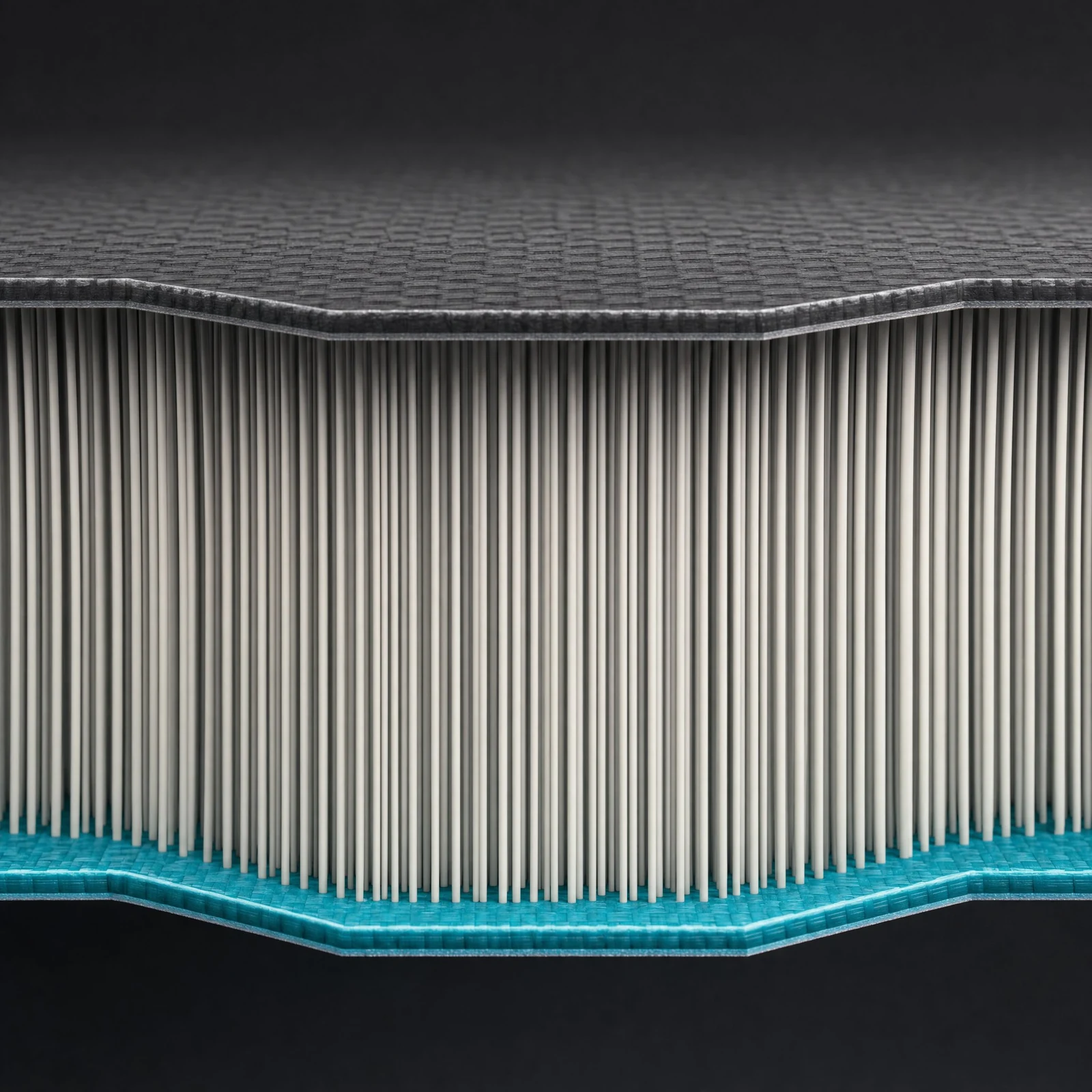
In Helyora pools, this design is reflected in two proprietary technologies: D-Stitch™, the internal high-tension strands that provide structural rigidity to the wall, and AerVault™, a heat-fused seal with anti-leak valves that maintains stable pressure throughout the season. No steel frames that rust, no thin liners that crack by the second summer. Each pool also includes High-pressure hand pump and repair kit, and is covered by the 3-year EU legal warranty, with an estimated lifespan of 7 to 10 years with normal care. If you're interested in the technical details, we cover them on our technology.
Conclusion: A pool in the backyard, no construction required, and this very weekend
A rigid above-ground pool gives you the essentials of an in-ground pool—sturdy walls, years of use, a real swimming experience—without excavation, without a permit in most cases, and without permanently altering your yard. You choose the size based on your space, prepare a level base in an afternoon, and set it up in 20 minutes. And if you move or change your mind, the pool goes with you.
Explore the Azora, Marea, and Solara collections on our portable pool store and choose yours with shipping throughout Europe.